Friday, May 4, 2012

Computer CPU Reviews

Computer CPU Reviews Description
The CPU isn’t the big tower under (or on top of) your desk! It’s actually the central processing unit–the chip inside your computer that acts as the brain of the system. It’s the single biggest factor for a computer’s performance and one of it’s most expensive components. Choosing the right CPU can determine how many years of use you get of your computer, how long it takes your computer to do things like boot up and open applications, and how much power your computer consumes. Yes, it’s that important.
Choosing a CPU (frequently called the processor) can be very hard if you get too bogged down in the numbers, but it really doesn’t have to be a difficult task if you understand a few basics.
Frequency (aka speed, as in gigahertz).This number, something like “2.2GHz”, is the speed at which your CPU runs. Generally the more, the better, but this is just one factor in determining the CPU you need–you can’t choose on just frequency alone!
Cores. Today’s CPUs often have more than one core, which is like having more than one CPU in the computer.  Having a dual-core CPU can be a huge advantage for certain programs, as can having a quad-core CPU. Not every program can take advantage of both cores though, so a dual-core isn’t always that much faster than a single-core. Even when the program is multi-core compatible, you won’t get 2x the performance. Multi-core processors are the way to go though, especially for people who like to create/work with content, like video.
Brand. Most of the desktops we’ll be looking at (the vast majority in fact) will be powered by AMD or Intel processors.  One is not inherently better than the other and for most of the processors Intel has, AMD will have something nearly equivalent. If you want maximum performance right now, Intel does have the lead.
Cache / FSB / etc. This stuff is very important to folks that are looking for a good desktop, who don’t want to worry about it.  If you get the right processor you won’t have to care about how much L2 cache it has… we’ll let the manufacturers worry about that.
Computer CPU Reviews
Phenom II X4 955 BE - AM3 CPU Review  
CPU-Z Review - YouTube

Comparing AMD Processors

Comparing AMD Processors Description
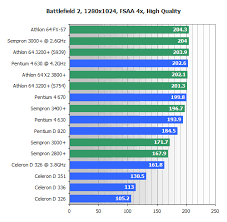
Model numbers of Athlon XP/MP/64 processors indicate processor's performance relative to Pentium 4 line of processors. Model numbers for AMD Sempron processors are relative to Intel Celeron family of processors. The model numbers are written as: 
<number>+
The number is basically a Pentium 4 megahertz rating. The model number always includes trailing '+' character to distinguish it from real processor frequency.The main reason for using model numbers is that the processor performance does not only depend from the processor frequency, it also depends on other processor features, such as FSB (front-side bus) speed, L2 cache size, microprocessor architecture and other CPU features. As the Athlon, and especially Athlon 64 CPU family significantly outperforms the Pentium 4 processors at the same clock frequency, comparing only processor frequency puts AMD processors in disadvantage. Using model numbers for processor comparison makes comparison process more fair. Please note that because model numbers are based on benchmarks of wide range of applications, they should be treated only as an approximation of the processor performance. There are always applications that will perform faster or slower than processor's rated performance.
Comparing AMD Processors  

Comparing AMD Processors  
AMD C-50 vs Atom N550 1080p YouTube  
Head To Head Image Processing - AMD FX-8150

Compare Computer Processors Performance

Compare Computer Processors Performance Description
Intel
The current performance and market leader at the time of this writing is Intel.  Intel is currently the sole supplier of processors for all recent Apple computers (Macbook, Macbook Pro, Mini, iMac etc.) and are found in virtually all major computer manufacturer's product lineups. Intel's most current crop of CPUs are the Core iX-series processors which include the i3, i5 and i7; as of January 2011, these series of processors entered their 2nd generation (codenamed "Sandy Bridge" where the 1st generation was codenamed "Nehalem", differences explained under the special features section).  
AMD
AMD is the second largest supplier of processors for personal computers.  Many of their products are found in both high-performance and budget-oriented notebooks as well as low-cost, enthusiast-oriented desktop builds.  The Phenom II and Fusion platforms comprise AMD's most popular and mainstream offerings at the time of this writing.  The Fusion processors are a line of AMD processors that contain a graphics procession unit integrated with the processor.  The Fusion line offers similar processors from the energy efficient Atom processor up to the powerhouse Core iX series. 
Beneath, we provide a chart which compares the relative performance between competing product lines within Intel's and AMD's offerings. These are organized by the following three classes: high-end, mid-range and economy.  It is important to note that though this comparison offers a reference of relative performance within each brand, it does not necessarily indicate absolute rankings between competing Intel and AMD products (for instance, the Core i7 is in the same row and category as the Phenom II series but offers superior general performance). Further, the Core iX Mobile series only indicate relative performance for notebook platforms -- that is, it is generally not useful to compare them to desktop processors such as the Intel Core i7 or the Phenom II series.
Compare Computer Processors Performance
Compare Computer Processors Performance
Learning the Components: Computer Processors  
Intel Core i5 2500K vs i7 2600K Buying Advice

Compare AMD Processors

Compare AMD Processors Description
AMD's Athlon and Turion series of processors have grown very popular in the recent past. Both Athlon and Turion are a series or category of processors. When comparing processors, it is more relevant to compare specific processors rather than processor families. 
Compare AMD Processors
Compare AMD FX 6100 6-Core Processor  
AMD processors vs Intel processors - YouTube

Cheap AMD Processors

Cheap AMD Processors Description
Athlon XP 2400+ is not the fastest CPU with Thoroughbred core, but it is still a good choice to consider if your motherboard doesn't support Barton and Thorton cores. The primary reason for this is that at this moment (May 2006) the fastest Athlon XP rated 2600 MHz is difficult to find, and it's way overpriced. As its rating suggests the Athlon XP 2400 on average is on par with Pentium 4 2.4 GHZ (depends on application), and only 5% or less slower than Athlon XP 2600+ and cheaper.
Cheap AMD Processors

Fixed Cheap AMD CPU Fan - YouTube
Cheap Amd Athlon 64 Processors 3700 Reviews

ARM Processor Project

ARM Processor Project Description
Nvidia managed to create quite a splash back in January when it first announced that it was developing a high-performance ARM-based processor code-named Project Denver, and now, Jen-Hsun Huang, the company's CEO, has released additional details about this upcoming CPU, including the fact that it will be based on a 64-bit ARM architecture.
 The processor is designed to support future products ranging from personal computers and servers to workstations and supercomputers.
“To take the ARM processor, partner with them to develop a next-generation 64-bit processor to extend it so that all of computing can have the benefits of that instruction set architecture. 
ARM Processor Project
NVidia announced Project Denver   
Nvidia Project Denver - YouTube

ARM Processor Design

ARM Processor Design Description
processor model is based on the ARM 720T instruction set.  It features a 5-stage pipeline and is modeled in Figure 1 below.  The beginning of the process starts in the program counter (PC).  This increments by one each clock cycle unless there is a branch instruction.  The output from the PC goes to the instruction memory which outputs a 32-bit instruction from the address location specified by the PC.  The instruction is loaded into the FD Register which sets ‘Regwrite’ (bit that indicates whether the register file will be written to).  It also sends the instruction to the DE Register and MUX which selects the arguments which will be used for logic functions.  The DE Register sends instructions to the arithmetic logic unit (ALU) which performs all logic functions and branch instructions.  After the logic function has been performed by the ALU, the result is passed to the EM Register.  The EM Register holds the value to be passed onto RAM if the load or store signal is given.  The MM Register then either gets values from the EM Register or the RAM and writes to the Register File. 
The whole purpose of the pipeline is to execute one instruction per stage at a time.  If there was no pipeline, the whole process would have to wait for one instruction to fully execute taking more time per instruction.  This pipeline model is similar to an assembly line in which different processes can be completed at each stage of the pipeline.
ARM Processor Design
ARM and IBM develop 14nm processor - YouTube  
New ARM processor-based Industrual solutions